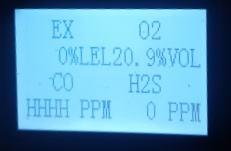
Carbon monoxide detection This detector started alarming almost immediately when placed at the opening of a freshly opened bag of coffee beans and was pegged at >1000 ppm CO (shown as ‘HHHH’). A can of ground coffee was even higher, staying above 1000 ppm for several minutes after the detector was moved away.
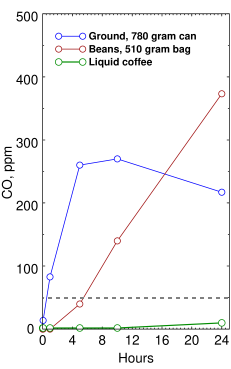
CO production rate in coffee CO was allowed to dissipate from coffee beans, ground coffee, and iced coffee overnight. Containers were then closed and the CO was measured at various times. In the absence of beans and bean fragments, little new CO was produced. The can was hard to seal and some of the CO may have leaked out. EPA limit of 50 ppm is shown by the dashed line.
 almost had a heart attack this week when I opened a bag of coffee
beans next to a carbon monoxide (CO) detector. Within seconds the
detector started screaming and flashing. Within seconds it pegged
at over 1000 ppm (parts per million), over 20 times the OSHA maximum
allowable limit of 50 ppm for continuous exposure in air.
almost had a heart attack this week when I opened a bag of coffee
beans next to a carbon monoxide (CO) detector. Within seconds the
detector started screaming and flashing. Within seconds it pegged
at over 1000 ppm (parts per million), over 20 times the OSHA maximum
allowable limit of 50 ppm for continuous exposure in air.
Ground coffee was even worse. A freshly opened plastic container of ground coffee also pegged the meter. After I moved the detector into the next room to prevent the sensor from being damaged by the high levels of CO, the reading gradually decayed to zero over a period of five minutes, suggesting that the level was higher in ground coffee than in the beans. The atmosphere above a half full jar of iced coffee that had been in my refrigerator for about a week also showed about 430 ppm of carbon monoxide. This is also in the hazardous range.
Carbon monoxide is not to be confused with carbon dioxide (CO2), which is much less dangerous.
CO rapidly dissipates from an open container. After one hour outside, the level at the top of the bag containing beans had dropped to 120 ppm. After being left overnight, CO was undetectable. Sadly, the coffee aroma was also undetectable (though I might not have gotten close enough). I closed the containers and re-measured CO in the air above the coffee at various times. CO increased continuously in both containers, indicating that it was not just diffusion of residual CO, but that new CO was being produced (see graph at right). Almost no new CO was produced by liquid coffee without beans or bean fragments. Grinding coffee beans released a little more CO.
Carbon monoxide was also present in a freshly opened box of 48 tea bags, but the levels were much lower (29 ppm). A bag of coffee beans that had been opened six months ago showed no reading, as did a plastic container of coffee that had been opened two years ago. The readings were zero for milk.
Are you taking your life in your hands by drinking coffee?
Simple answer: no. Assuming your kitchen is 4800 cubic feet, the amount of carbon monoxide in a 1/8 cu.ft. can of coffee grounds would be diluted to 0.026 ppm, which is less than the 0.12 ppm normally in the atmosphere. So even if you left the can open, it should not be a significant hazard. However, putting your nose next to a freshly opened can and inhaling it would be a bad idea. It is the concentration × time that causes risk. The important variable is the percentage of hemoglobin bound to CO. Levels over 10% cause headache and dizziness. Levels over 30% cause neurological and cardiological impairment. Fetal hemoglobin has higher affinity for CO than adult hemoglobin, so babies are more sensitive to CO.
Finding reliable dose-concentration data is difficult. www.co2meter.com says CO at 1600 ppm causes death within 25–30 minutes. On the other hand, one online carbon monoxide calculator says at 1600 ppm you have to be exposed for 10.47 hours before dying. NIOSH is cagey about the whole thing, probably because there’s large individual variation.
It’s easy to laugh it off, but the risk of inhaling coffee aroma is quite real. And to be honest, I’ve always had my doubts about those baristas at Starbucks. They always looked a little dizzy to me.
The toxic effects of methylene chloride (dichloromethane), formerly used as a paint stripper, are primarily neurological, but it is also metabolized to CO in the liver and can cause CO toxicity.
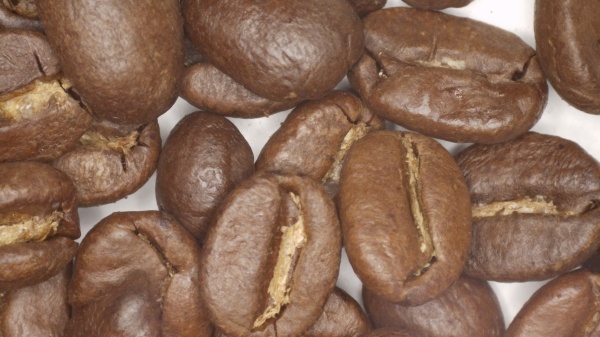
Deadly Colombian Arabica Beans? This product is known to the State of California to contain chemicals that may cause jitteriness, wakefulness, and increased ability to perform boring tasks, and oh yes, I almost forgot, it’s packed with carbon monoxide
Can an ordinary detector measure CO?
If you slapped a household carbon monoxide detector up against a cup of coffee or even a container of coffee grounds, it would show ‘0.’ This is because commodity CO alarms are designed to make certain never to give a false alarm. This is done by strongly damping the time response and by suppressing any readings below 100 ppm. For instance, UL 2034 says that at 150 ppm CO, a detector must not activate before 10 minutes. The detector I used was NIST-calibrated and was designed for industrial R&D and professional field use. In retrospect, I should have bought the extra pump and the stainless steel probe. This would have made measuring the exposure to those deadly Colombian Arabica beans a little safer.
Those drinking water test strips are also questionable, at least for lead. Most people never notice, but the minimum detectable limit for lead on those strips is 20 ppm (i.e. 20,000 ppb), while the trigger level for lead in drinking water used by the EPA is 10 ppb—2000 times lower (note the different units*). The industry knows about this problem and they’re working on more sensitive lead detectors. But for now it's a bad idea to trust a test strip. (Note that the box says “Easy, Fast, Accurate.” Nowhere on the box does it say “Sensitive.”) We can’t complain too much; they deserve credit for trying.
NoteThese numbers do NOT mean the product is hazardous or unsafe to eat or drink. The presence of CO is mainly a curiosity.
Household bathroom scales are even worse. Most of them are programmed to show the same weight if you weigh yourself again within five minutes or so. The purpose is to make you think they’re accurate when they’re really not. On an analytical instrument, if you weigh something twice you rarely get exactly the same reading. There is always noise.
The human body produces carbon monoxide
The body produces small amounts of many toxic gases, including nitric oxide, hydrogen sulfide, and carbon monoxide. These molecules are neurotransmitters, sometimes called gasotransmitters, and they’re important for brain function. Endogenous CO is produced by heme oxygenase, which catalyzes the breakdown of heme to CO, reduced (ferrous) iron (Fe2+), and biliverdin.
This is not a new discovery. Roasted coffee beans emit so much carbon monoxide that the US CDC says coffee is a potential respiratory hazard for workers in the coffee industry. Sealed cans of ground coffee can bulge over time as CO and aromatic gases are released. Coffee also releases α-diketones including diacetyl and 2,3-pentanedione [1], the molecules that cause the infamous “popcorn lung” caused by inhaling microwaved popcorn fumes. The function of CO in the body is not known for certain. One theory is that CO could be involved in heat stress response. [2,3]
How do plants produce carbon monoxide?
CO is a signaling molecule in plants.[4] The most popular theory is that plants produce CO the same way humans do: by heme oxygenases.[5] However, the authors of one study [6] hypothesized that flavonoids such as quercetin and 2,3-dehydrosilybin could release CO upon exposure to light. Another theory is that CO release is caused by reactive oxygen species produced by UV exposure. Plants can also absorb CO from air and detoxify it with cytochrome p450.
Many other plants besides coffee and tea, including Pinus halepensis (Jerusalem pine) trees, produce CO.[4] It is thought that this protects the plant against stress.
Carbon monoxide releasing drugs
CORMs, or carbon monoxide releasing molecules, are drugs designed to release small amounts of therapeutic CO. They were thought to reverse diet-induced obesity in mice.[7] An example is CORM-401, which was said to reduce inflammation. There are also claims that CORM-401 induces nitric oxide (NO) release and that it raises body temperature by activating thermogenesis and also lowers white adipose tissue mass. It also supposedly elevates serum corticosterone levels.
However, these claims are controversial. An influential paper [8] was sharply critical of CORM-2, -3, -A1, and -401 and suggested that their effects were not due to CO but to the molecules the CO was complexed with.
It gives new meaning to the expression “He smelled the coffee.”
Update (Sep 12 2026): Other food items tested for carbon monoxide
Many other common food items were found to contain carbon monoxide. Most of these were in sealed containers. Most positive readings except for Coffee Mate (which contained corn syrup solids and hydrogenated vegetable oil) were in plant-based products.
Update (Oct 17 2026): Safety issue
Make sure your carbon monoxide monitor is fully charged before taking it into a hazardous environment. The one I have starts up normally, then says “Auto power off” and shuts down when it detects high CO if the battery is low without giving any prior warning.
This is common with LED flashlights as well. They will suddenly turn off with no warning if the battery gets low. If you happen to be in an unlit crawlspace or a tunnel you better have a second one on you. Manufacturers, please put a flashing red LED in these things.
| Food | Brand | State | CO, ppm |
|---|---|---|---|
| Ground coffee | Maxwell House | Freshly opened 27.5 oz can | >1000 |
| Coffee beans | Eight O’Clock | Freshly opened 18 oz bag | >1000 |
| Ground pepper | Kroger | Freshly opened 6.25 oz jar | >1000 |
| Spanish peanuts | Kroger | Freshly opened 12 oz can | 680 |
| English Breakfast Tea | Harney&Sons | Freshly opened 16 oz bag | 347 |
| Pretzels | Rold Gold | Freshly opened 16 oz bag | 206 |
| Coffee mate | Nestle | Freshly opened 16 oz jar | 101 |
| Hot sauce | Texas Pete | Freshly opened 24 oz bt | 66 |
| Potato chips | Ruffles | Freshly opened 13 oz bag | 36* |
| Tea bags | Luzianne | Freshly opened 12 oz box | 29 |
| English Breakfast Tea | Full Leaf Tea Co. | Freshly opened 8 oz bag | 20 |
| Parmesan Cheese | Kroger | Freshly opened 8 oz jar | 19 |
| M&M's | Mars Wrig. | Freshly opened 38 oz bag | 12 |
| Tea, Earl Grey | Full Leaf Tea Co. | Freshly opened 8 oz bag | 6† |
| Cranberry juice | Ocean Spray | Freshly opened 3 L bt | 0 |
| Ramen noodles | Maruchan | Freshly opened 3 oz bag | 0 |
| Mayonnaise | Hellmans | Freshly opened jar | 0 |
* Low oxygen alarm also went off † Also showed 4 ppm hydrogen sulfide (H2S)
Additional results will be added as other food items are opened Note: These numbers do NOT mean the product is hazardous or unsafe to eat. CO levels decreased rapidly after container was opened.
[1] LeBouf RF, Aldridge M. Carbon monoxide emission rates from roasted whole bean and ground coffee. J Air Waste Manag Assoc. 2019 Jan;69(1):89–96. doi: 10.1080/10962247.2018.1515125. PMID: 30148693; PMCID: PMC6430709.
[2] Zuhra, K., Petrosino, M., Janickova, L. et al. Regulation of mammalian cellular metabolism by endogenous cyanide production. Nat Metab 7, 531–555 (2025). Link Link
[3] Muller JD, Qubaja R, Koh E, Stern R, Bohak YL, Tatarinov F, Rotenberg E, Yakir D. Leaf carbon monoxide emissions under different drought, heat, and light conditions in the field. New Phytol. 2025 Mar;245(6):2439-2450. doi: 10.1111/nph.20424. PMID: 39887711.
[4] Bazvand F, Wojtyla Ł, Eisvand HR, Garnczarska M, Adamiec M. Exploring the Role of Carbon Monoxide in Seed Physiology: Implications for Stress Tolerance and Practical Uses. Int J Mol Sci. 2024 Dec 30;26(1):223. doi: 10.3390/ijms26010223. PMID: 39796077; PMCID: PMC11719907.
[5] Feng L, Wei L, Liu Y, Ren J, Liao W. Carbon monoxide/heme oxygenase system in plant: Roles in abiotic stress response and crosstalk with other signals molecules. Nitric Oxide. 2023 Sep 1;138–139:51–63. doi: 10.1016/j.niox.2023.06.005. PMID: 37364740. Paywalled.
[6] Muchová Sčranková M, Balasubramani S, Mehta P, Vlachopoulou D, Kapoor A, Ramundo A, Jézéquel YA, Bożk I, Hurtová M, Klán P, Křen V, Vítek L. Carbon Monoxide-Releasing Activity of Plant Flavonoids. J Agric Food Chem. 2025 Jan 15;73(2):1308–1318. doi: 10.1021/acs.jafc.4c09069. PMID: 39740217; PMCID: PMC11741109.
[7] Hosick PA, Al Amodi AA, Hankins MW, Stec DE. Chronic treatment with a carbon monoxide releasing molecule reverses dietary induced obesity in mice. Adipocyte. 2015 Aug 7;5(1):1–10. doi: 10.1080/21623945.2015.1038443. PMID: 27144091; PMCID: PMC4836479.
[8] Bauer N, Yuan Z, Yang X, Wang B. Plight of CORMs: The unreliability of four commercially available CO-releasing molecules, CORM-2, CORM-3, CORM-A1, and CORM-401, in studying CO biology. Biochem Pharmacol. 2023 Aug;214:115642. doi: 10.1016/j.bcp.2023.115642. PMID: 37321416; PMCID: PMC10529722.
* The EPA actually uses ppbw or parts per billion by weight, so 0.01 mg / L (the limit for lead) is equivalent to 10 ppb. An alternative unit used by chemists is mole units, where 1 ppb means one molecule per 1 billion molecules (or atoms as the case may be). The regulatory limits are all over the place, with some places saying 100 ppb and others saying 0, meaning there is no safe level. The photometric lead test kits claim to detect 1 μg/liter or 1 ppbw but they are not 100% specific for lead.
sep 03 2026, 5:05 pm. last updated sep 12 2026. An earlier version said the lead test strips were sensitive to 20 ppb. This has been corrected to 20 ppm.